Dead Sea Treasures
Which Dead Sea Soap Is Right for You? A Buyer's Guide

We make seven soaps. Six cost $9.99 and one costs $6.99, they are all made in Jordan at the Dead Sea, and on a shelf they look like seven versions of the same idea. A few genuinely are close cousins. Others are nothing alike, and picking the wrong one is the difference between a bar you finish and a bar that sits in the cupboard. This guide tells them apart in plain language, including where the differences are smaller than the labels suggest.
Worth setting expectations first: a bar sits on your skin for perhaps thirty seconds before you rinse it away. The differences between these are differences of lather, texture and how skin feels afterwards.
How to choose: two questions
1. How do you want skin to feel afterwards?
This question sorts the range into three groups.
- Soft and cushioned. A rich, conditioning wash with no tight feeling afterwards: Olive Oil Soap and Glycerin Soap.
- Clean and matte. A brisker, more mineral finish, skin properly washed rather than coated: Salt Soap, Mud Soap and Sulfur Soap.
- Polished. Texture in the bar itself, so washing and exfoliating happen in one step: Loofah Soap and Scrub Soap.
2. Where will the bar live?
Face. Keep to the smooth bars — olive oil, glycerin or mud. Facial skin does not want walnut grit or loofah fibre dragged across it every morning.
Body and shower. Anything works here, and this is where the salt, loofah and scrub bars earn their place.
Hands, by the sink. A bar at a basin gets used ten times a day and never fully dries, so choose a conditioning one and give it real drainage. The loofah bar suits kitchen work and at $6.99 is the least painful to replace.
The seven bars, one by one
Mud Soap
The Mud Soap is the shoreline mud in bar form, built on Dead Sea mud with glycerin, vitamin E and chamomile. It lathers a soft grey and rinses away completely, leaving skin feeling clean and matte rather than cushioned. If you already use a mud mask and like how your face feels afterwards, this is the daily version of that. Face or body.
Olive Oil Soap
Olive Oil Soap is the classic Levantine bar: olive oil and grape seed oil with glycerin, over a Dead Sea mineral base. The lather is low and creamy rather than foamy, the scent is faint and green, and it is the gentlest-feeling wash of the seven. If your skin feels tight after washing with anything else, start here. It is also the safest bar to buy as a gift.
Salt Soap
Salt Soap is Dead Sea salt and minerals held together with natural oils, and it is the most distinctly Dead Sea bar of the set. Two things surprise people: it lathers less than expected, and it is noticeably hard, which is why it outlasts softer bars. Skin feels clean and slightly smoothed. Better on the body than the face.
Sulfur Soap
Sulfur Soap is the traditional bar of the range — sulfur and olive oil over the mineral base — and the one people either already know or have never considered. Its defining characteristic is the smell: unmistakable, faintly eggy, obvious in a warm shower, and gone from skin soon after you rinse and dry. It is a deep-cleansing wash that leaves skin feeling very clean and matte, and the least cosy bar we make. If you have used a sulfur bar before, you know whether you want this one. If not, it is not where to start.
Glycerin Soap
Glycerin Soap is glycerin and grape seed oil with Dead Sea salt and minerals: translucent, mild, slippery in the hand, and the softest-feeling wash of the seven — the closest thing we have to a bar nobody objects to. The honest drawback is physical: glycerin bars are soft, they drink water, and one left in a puddle disappears faster than anything else here.
Loofah Soap
Loofah Soap is a glycerin bar with natural loofah set into it, so the wash and the washcloth are the same object. The exfoliation is gentle — a sweep rather than a scour — which suits feet, elbows and hands. It comes in Rose, Lemon, Lavender and Orange, the only bar here with a scent choice, and at $6.99 it is the cheapest way into the range.
Scrub Soap
Scrub Soap uses walnut shell powder with sweet almond oil and vitamin E, and it is the more serious exfoliant of the pair. The grit is fine but hard, so it polishes where the loofah bar sweeps. Use it on legs, shoulders and backs of arms, and not every day. Skin feels notably smooth afterwards.
Where these bars genuinely overlap
A fair guide says which purchases duplicate each other.
- Salt, Olive Oil and Glycerin are close. All three are everyday mineral-base bars. Buy all three and you will notice real differences in lather and finish, but not in kind. Pick the one matching how you want skin to feel.
- Loofah Soap is a glycerin bar with loofah in it. Its own product page says so. If you own one, the other adds texture and a scent choice, not a different wash.
- Loofah and Scrub both exfoliate. They differ in coarseness, not purpose. Most people want one of the two, not both.
- Mud and Sulfur finish similarly. Both leave skin feeling clean and matte. Sulfur is the more assertive of the two, mostly on account of the smell.
The seven bars compared
| Soap | Built on | In the hand | How skin feels after | Best on | Price |
|---|---|---|---|---|---|
| Mud | Dead Sea mud, glycerin, chamomile | Soft grey lather, rinses clean | Clean, matte | Face or body | $9.99 |
| Olive Oil | Olive and grape seed oil | Low, creamy lather, faint green scent | Soft, cushioned | Face or body | $9.99 |
| Salt | Dead Sea salt and minerals | Hard bar, modest lather | Clean, lightly smoothed | Body | $9.99 |
| Sulfur | Sulfur and olive oil | Traditional bar, unmistakable scent | Very clean, matte | Body | $9.99 |
| Glycerin | Glycerin and grape seed oil | Translucent, slippery, soft bar | Softest, most cushioned | Face, body or hands | $9.99 |
| Loofah | Glycerin base with loofah fibre | Textured, four scents | Lightly polished | Hands, feet, body | $6.99 |
| Scrub | Walnut shell powder, almond oil | Gritty, firm | Notably smooth | Body only | $9.99 |
How to make a bar last
Most soap is not used up. It is dissolved, and the fix is boring: water has to run away from the bar.
- Use a dish that drains. Slatted, ridged or wire. A flat saucer holds a shallow pool and the underside turns to slush in it.
- Keep it out of the spray. A bar in the direct line of a running shower is rinsing down the drain the whole time you are in there.
- Let it dry between washes. A bar that fully hardens lasts considerably longer than one that never gets the chance.
- Cut it in half. Half in the shower, half dry in a cupboard. The waiting half hardens as it sits.
- Do not seal a wet bar in plastic. If you are travelling, let it dry first, then use a cloth or a vented tin.
Hardness varies, and it is fair to know before you buy: the salt and scrub bars are firmest and most forgiving of a wet bathroom, the glycerin and loofah bars softest and fussiest about drainage.
Where we would start you
If you want one bar and no decisions, take the olive oil one. If you want the bar that feels most like the Dead Sea itself, take salt or mud. If you want texture, the loofah bar at $6.99 is the cheapest way to find out whether you like exfoliating in the shower; the scrub bar is where to go if you want more. And if the sulfur bar is what brought you here, you already know.
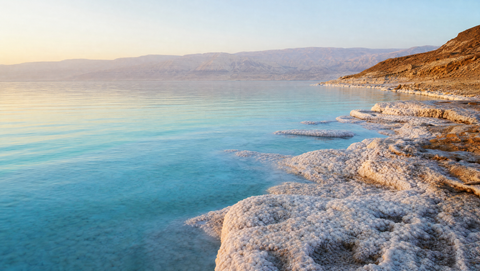
All seven live in the Mud & Soap collection, and if you would rather see what people reorder, that is what the bestsellers page is for. We have made these in Jordan, at the Dead Sea — around 430 metres below sea level, carrying one of the highest mineral loads of any water on earth — since 1995. 99 bar is a small experiment.