Dead Sea Treasures
Where to Buy Authentic Dead Sea Salt (and How to Tell It Is Real)

If you are searching for where to buy Dead Sea salt, you have probably seen dozens of options. Some are genuine, harvested at the Dead Sea in Jordan. Others are ordinary salt with a misleading name. This guide helps you tell the difference, so you can feel confident in what you bring into your bathroom.
What Genuine Dead Sea Salt Is
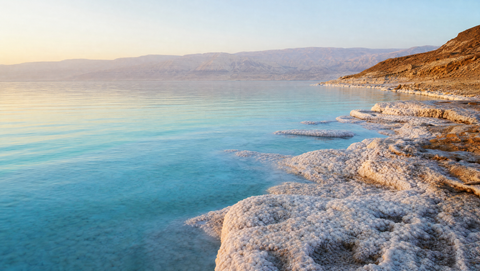
Genuine Dead Sea salt comes from the Dead Sea, a salt lake at the lowest point on earth, about 430 meters below sea level. The water there is dense with minerals, and when the water evaporates, the salt that remains carries a natural mineral profile. That is why it feels different from table salt or common bath salt. It is harvested, cleaned, and packed, with no need for dyes or fragrances to make it look or smell a certain way.
Origin matters because the Dead Sea is a specific place. Salt from other regions, even if it is natural, does not have the same mineral mix. When a brand says "Dead Sea salt," it should mean salt that was actually harvested there. That is the first thing to verify.
What to Look for on a Label When You Buy Dead Sea Salt
A clear label tells you a lot. Here is what to check before you buy:
- Country of origin: It should say Jordan, or specifically the Dead Sea region in Jordan. If it only says "Dead Sea salt" without a country, be cautious.
- Ingredients: For plain bath salt, the ingredient list should be short: Dead Sea salt. That is it. No added dyes, no synthetic fragrances, no fillers.
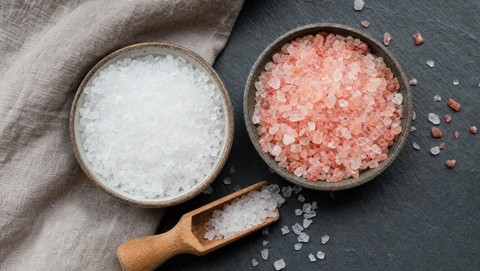
- Crystal size: Natural Dead Sea salt crystals are often coarse and irregular. Fine, uniform white powder can be a sign of processing or dilution.
- Packaging: A maker who harvests at the source usually says so clearly. Look for a brand that names the Dead Sea and stands behind its origin.
Red Flags for Imitation Salt
Some products use the name "Dead Sea" loosely. Watch for these signs:
- No country of origin, or a country far from the Dead Sea.
- Added colors or strong perfume-like scents. Real Dead Sea salt does not need them.
- Very low price for a large amount, which can indicate common salt with a markup.
- Claims that sound like promises. Salt is a cosmetic ingredient, not a medicine. If a label promises results for a specific skin problem, that is a red flag.
Why Buying Direct from a Maker at the Source Matters
When you buy from a maker who works at the Dead Sea, you shorten the supply chain. That means less chance of substitution or dilution. It also means the salt is more likely to be packed close to where it was harvested, with fewer middlemen.
Dead Sea Treasures has been making mineral skincare in Jordan since 1995. We harvest at the Dead Sea, about 430 meters below sea level, and pack our salt and other products there. If you want to buy Dead Sea salt with a clear origin, our Dead Sea Mineral Bath Salt is a simple place to start. It is just salt, coarse and natural, with no added dyes or fragrances.
How Much to Buy for a Month of Baths
If you enjoy a salt bath a few times a week, a common approach is to use about one to two cups per bath. For three baths a week, that is roughly 12 to 24 cups a month. A 2-pound bag holds about 6 cups, so you might need two to four bags for a month. A 5-pound bag holds about 15 cups, which can last a month for some routines. Start with one bag and see how you use it. You can always reorder.
For a foot soak, you need less, about half a cup in a small basin. That same bag will last much longer.
Storing Dead Sea Salt in a Humid Bathroom
Dead Sea salt attracts moisture. In a steamy bathroom, it can clump. That does not mean it is spoiled, but it can be harder to scoop. To keep it manageable:
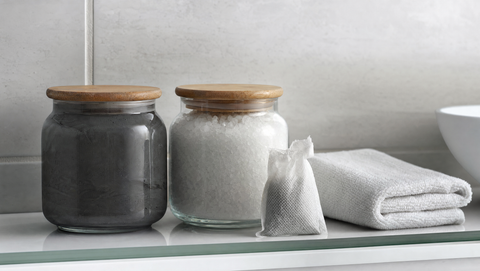
- Keep the salt in its original bag, or transfer it to a jar with a tight-fitting lid.
- Store it in a cabinet or closet, away from direct steam if possible.
- If it clumps, break it up with a spoon. It still dissolves fine in warm water.
- Do not leave the bag open. Close it after each use.
What to Pair with Dead Sea Salt
Salt is just one part of a simple routine. If you like the feel of mineral salt, you might also enjoy:
- Body Scrub, Salt with Oil for a smoother texture in the shower.
- Salt Soap for daily cleansing.
- Dead Sea Genuine Water if you want to add a splash to your bath.
- Foot Cream after a foot soak.
- Intensive Body Butter to seal in moisture after a bath.
You can also explore our bath minerals and body care collections for more ideas.
Simple Ways to Use Dead Sea Salt
For a bath, dissolve one to two cups in warm water and soak for 15 to 20 minutes. For a foot soak, use half a cup in a basin. You can also mix salt with a little oil to make a gentle scrub. Always rinse well and pat dry. If your skin feels dry after, follow with a moisturizer like our body butter.
Remember, salt is not a medicine. It is a traditional bath ingredient that many people enjoy for its feel and its connection to the Dead Sea.
Buying with Confidence
When you buy Dead Sea salt, you are choosing a product with a story. That story starts at the Dead Sea, in Jordan, and it should be told honestly on the label. Look for the country of origin, keep the ingredient list simple, and buy from a maker who works at the source. That way, you know what you are getting.
If you are ready to try genuine Dead Sea salt, start with our Dead Sea salt collection. We ship free on orders over $65, and returns are accepted within 30 days. Any three pieces are 15% off automatically. It is a simple way to bring a little of the Dead Sea into your routine.