Dead Sea Treasures
How to Use Dead Sea Bath Salt: A Complete Guide

A Dead Sea salt bath is one of the simplest things you can do for yourself at the end of a long day — but there is more to it than tipping a scoop into hot water. How much salt you use, how warm the water is, how long you stay in, and what you do straight after all change how your skin feels. Here is the full routine, plus other ways to use the same jar when there is no time to soak.
What Dead Sea salt is, and why it looks different
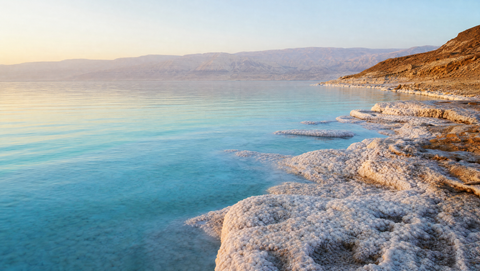
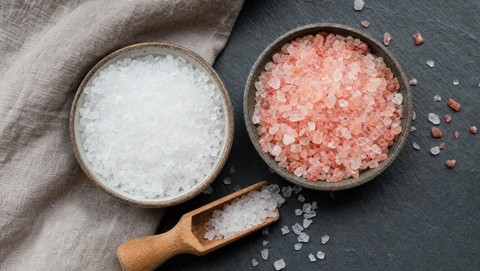
The Dead Sea sits roughly 430 metres (about 1,410 feet) below sea level, the lowest exposed land on earth, and its water carries one of the highest mineral loads of any body of water on the planet. Salt from there does not look like the fine white stuff in your kitchen: the crystals are coarser, chunkier and uneven in size within the same scoop. That is normal, and what you want to see.
Our Dead Sea Mineral Bath Salt is made in Jordan, at the Dead Sea itself, where the brand has been making mineral skincare since 1995.
How much Dead Sea salt per bath?
For a standard bathtub filled to a comfortable level, use 1 to 2 cups, roughly 250 to 500 g. If this is your first Dead Sea salt soak, start at the lower end and adjust from there.
- Standard tub, regular soak: about 1 cup (250 g)
- Fuller tub, or a more mineral-rich bath: up to 2 cups (500 g)
- Shallow or short soak: half a cup (about 125 g)
- Foot basin: a quarter cup (about 60 g)
Add the salt while the tub is filling, pouring it under the running water so the movement does the dissolving. Coarse crystals take a minute or two, so swirl the water by hand before getting in.
More is not better: three or four cups will not make the bath any nicer, and a heavily salted soak can leave skin feeling tight. One generous cup is a proper bath.
Water temperature: warm, not hot
Aim for comfortably warm, around 98 to 102°F (37 to 39°C). Warm water dissolves the crystals quickly and is far more pleasant to sit in for twenty minutes than water that starts out scalding.
Very hot water is the most common reason a bath leaves skin feeling dry and tight. Simple test: if your skin is noticeably pink when you step out, it was hotter than it needed to be.
How long should you soak?
Fifteen to twenty minutes is the sweet spot. Long enough for the salt to dissolve fully, for the water to still be warm at the end, and for you to actually switch off. Past roughly thirty minutes, skin starts to feel water-logged and the bath stops giving you anything extra. Keep a glass of water within reach — a warm bath is warm work.
How often can you take a Dead Sea salt bath?
For most people, two or three times a week works well. If you are new to it, start with once a week, see how your skin feels the following morning, and build from there. There is no prize for doing it nightly — daily long soaks are a lot for most skin regardless of what is in the tub. An evening soak is usually the easiest to keep up.
What to do before and after your soak
Before
Rinse off quickly in the shower first. Thirty seconds, and it means you get into clean water rather than the day's sunscreen and lotion. Tie long hair up unless you plan to rinse it afterwards.
After
This matters more than people expect.
- Rinse. Twenty to thirty seconds under plain warm water. A dried salt film left on the skin is what makes some people find salt baths itchy.
- Pat dry, do not rub. A towel used gently leaves skin damp rather than stripped.
- Moisturise within about three minutes, while skin is still damp — this is when a lotion does the most for how skin feels. Our Body Lotion is an easy match; start with shins, elbows and heels, the areas that tend to feel driest.
A salted tub is also slippery. Hold the rail as you get out, and rinse the tub so nobody is left standing on undissolved crystals.
Three other ways to use bath salt
As a foot soak
No bathtub, or no time? A foot soak gives you most of the ritual for a fraction of the effort. Dissolve about a quarter cup (60 g) in a basin of warm water deep enough to cover your ankles, and sit with it for ten to fifteen minutes. Dry properly afterwards, especially between the toes, then lotion the heels.
As an occasional gentle scrub
You can use bath salt as a light scrub, as long as you go easy. Take a small handful, wet it in your palm, and use gentle circular pressure on damp skin — elbows, knees and heels only. Do not press; the crystals are coarse and unblended. Skip the face, and avoid freshly shaved, sunburnt or broken skin.
If exfoliating is really what you are after, the Dead Sea Salt Body Scrub with Oil is built for the job — the oil lets the salt glide instead of drag, and leaves skin feeling smoother without the same care over pressure.
If you only have a shower
No tub at all? A weekly foot soak plus a Salt Soap in the shower covers most of the same ground, and the rest of the Bath & Minerals collection is worth a look if you are building a routine beyond the salt itself.
Choosing a scent
It comes in several scents, and the choice is purely about what you want the room to smell like:
- Lavender — the classic evening choice
- Lemon and Orange — bright and citrus-forward, better suited to a morning soak
- Menthol — a cool, fresh top note
- Violet — soft and floral
- Unscented — if you are sensitive to fragrance, or would rather add your own bath oil
How to store it
Salt pulls moisture out of the air, so storage is really about keeping it dry:
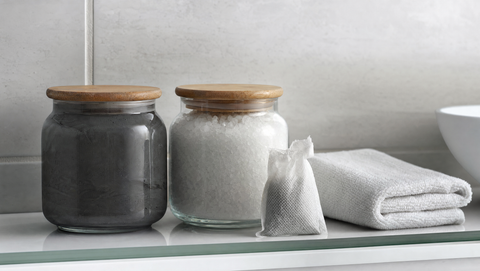
- Keep the container tightly closed in a cool, dry cupboard — not on the tub edge or a shower shelf where steam reaches it.
- Scoop with dry hands or a dry spoon. Wet fingers are how moisture gets in.
- Keep it out of direct sunlight, which fades the scent of fragranced varieties.
- Clumping is just trapped moisture, not a fault. Break it up with a dry spoon and use as normal.
Who should patch test first
If your skin runs sensitive, or you have reacted to scented bath products before, patch test first: dissolve a pinch in a little warm water, dab it on your inner forearm, and leave it 24 hours.
A few sensible cautions for everyone:
- Avoid soaking with broken, cracked, freshly shaved or sunburnt skin — salt water will sting.
- For external use only. Keep out of reach of children.
- If salt water gets in your eyes, rinse with clean water.
- If you are pregnant, or have any medical or skin condition, check with a healthcare professional before starting warm soaks.
Keeping it simple
Strip away the detail and the routine is four things: a cup of salt, comfortably warm water, twenty minutes, lotion straight after. Do that once or twice a week and you will notice the difference in how your skin feels the next morning. If you want to see what else people pair it with, our bestselling Dead Sea skincare is a good place to browse.